The Houston metropolitan area represents one of the most intense cooling environments in the world. Characterized by high ambient relative humidity and high-salinity marine environments across the Port of Houston and Galveston Bay, HVAC/R systems deployed in this region face unrelenting thermal loading and accelerated galvanic corrosion risks.
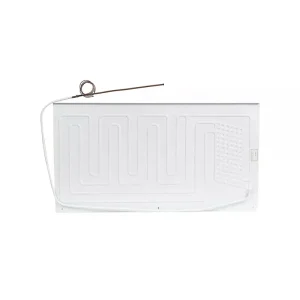
OEM refrigeration systems, marine thermal control units, and commercial cold storage systems in Houston require heat exchangers that combine high heat transfer rates with robust structural integrity. Custom roll-bonded aluminum evaporators, designed with specialized anti-corrosive powder coatings or epoxy finishes, fulfill this demand perfectly. These components deliver superior thermal efficiency and heat flux consistency compared to conventional tube-on-sheet configurations, reducing energy draw in heavy-duty commercial appliances.
As global supply chains shift, local procurement managers, facility engineers, and cooling equipment distributors in Houston are demanding direct relationships with certified manufacturers that can balance high-volume manufacturing output with rapid regional shipping routes via the Port of Houston.
The manufacturing of roll-bonded evaporators requires strict process control. The roll-bonding process begins with two clean sheets of high-purity aluminum alloys (typically AA1050 or AA1060). An advanced CNC screen printer prints a customized internal channel design onto one plate using a proprietary stop-weld ink formulation that prevents bonding in designated areas during heat exposure.
The plates are then matched, preheated, and passed through high-tonnage rolling mills under extreme mechanical pressure. This hot and cold rolling process bonds the atoms of the clean aluminum sheets together, forming a monolithic, gas-tight plate. Afterward, the unbonded regions are inflated under high pressure to form the precise internal fluid channels. This technique yields a heat exchanger with zero joint contact resistance, maximizing thermal transfer efficiency.
Our production facilities leverage advanced manufacturing equipment imported from Germany and specialized materials from Japan. We control thickness tolerance down to ±0.02mm, ensuring consistent thermal transfer performance.
We conduct thermal shock tests ranging from -35°C to 75°C for 500 hours, followed by helium mass spectrometer leak detection. Every unit is pressure-verified to withstand operating pressures well beyond standard HVAC parameters.
Originating in 1988 as the Xiangshan Refrigeration Accessories Factory of Zhejiang University, our engineering team works alongside domestic academic centers to continuously improve fluid channel design and heat flux calculations.
The following parameters outline the typical capabilities of our customized roll-bonded aluminum plate heat exchangers designed for commercial refrigerators, cooling panels, and battery pack heat sinks:
| Performance / Material Parameter | Standard Range Specification | Houston HVAC/R Custom Option |
|---|---|---|
| Base Plate Alloy | Aluminum AA1050, AA1060 (≥99.5% Purity) | Optimized for high thermal conductivity & bendability |
| Plate Thickness | 1.2 mm – 2.0 mm | Customized thickness up to 2.5 mm for heavy-duty apps |
| Max Dimensions (Flat Plate) | Width: Up to 1000mm, Length: Up to 2000mm | Precision-fit parameters for localized OEM enclosures |
| Internal Inflation Height | 3.0 mm – 5.5 mm | Optimized for variable flow dynamics of green refrigerants |
| Surface Protection Coatings | Hydrophilic film / Standard Anodizing | Salt-spray resistant epoxy coating (500+ hours test) |
| Helium Leak Detection Target | ≤ 1 x 10⁻⁷ mbar·l/s | 100% helium chamber inspection for hermetic assurance |
| Burst Pressure Limit | ≥ 4.5 MPa (Standard) | High-pressure channel profiles supporting up to 6.0 MPa |
Founded in 1988, Ningbo Taojun Refrigeration Equipment Co., Ltd. has developed from a dedicated engineering team into a national high-tech enterprise. Today, we supply international home appliance leaders, including Haier, Midea, Gree, Whirlpool, and Electrolux, with high-performance copper and aluminum heat transfer components.
Our QA processes conform to the requirements of the ISO 9001:2015 quality management system. To meet the specific requirements of North American partners, our production floor applies a comprehensive MES intelligent system. This system tracks every production stage, from raw materials to final packaging, and verifies compliance with international environment standards, including EU RoHS, REACH, and US UL certifications.
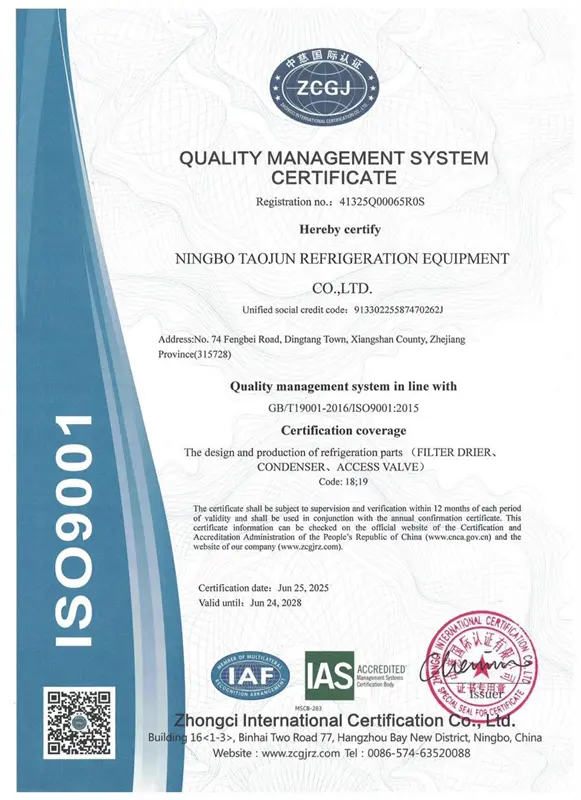
GB/T19001-2016 / ISO9001:2015 Registered Certificate
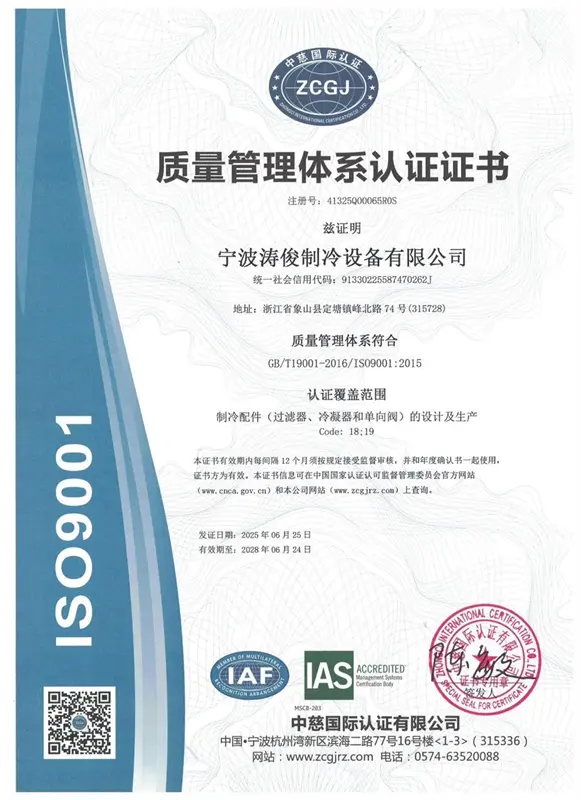
Zhongci International Verified scope of manufacturing
Sourcing specialized heat exchangers from global manufacturers demands reliable delivery schedules, clear customs processing, and consistent mechanical quality. Our team provides comprehensive logistics support, managing the shipping process from our manufacturing site to domestic destination warehouses. We handle all export documentation, tariff classification, and transit monitoring, delivering components directly to distributors and OEMs across the US Gulf region.
By shipping through major maritime trade routes, we ensure consistent delivery windows to the Port of Houston, avoiding regional overland shipping delays and minimizing port dwell times.
Our products are manufactured to meet regional environmental regulations, including RoHS and REACH, facilitating simple customs processing and regulatory alignment for commercial refrigeration systems.
Our dedicated engineering support team assists with design changes, operational calculations, and sizing modifications, ensuring rapid design cycles for your product development team.
The global refrigeration industry is transitioning away from high-GWP HFCs toward natural refrigerants, such as Isobutane (R600a), Propane (R290), and Carbon Dioxide (R744). This shift requires structural adaptations in heat exchanger design. Our engineers are optimizing internal channel cross-sections to improve turbulence and heat transfer rates at lower refrigerant charges, ensuring compliance with local environmental standards.
Additionally, our materials department is testing advanced aluminum-manganese alloys to improve mechanical strength, allowing for thinner channel walls without reducing structural integrity. Combined with our hydrophilic protective coatings, these innovations help maintain consistent heat transfer rates and system performance, even in high-humidity climates like the Texas Gulf Coast.
 Taojun