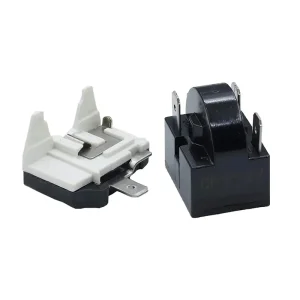
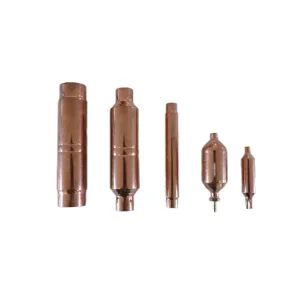
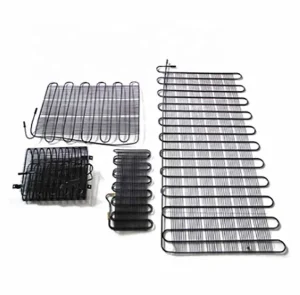
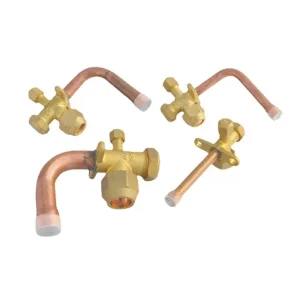
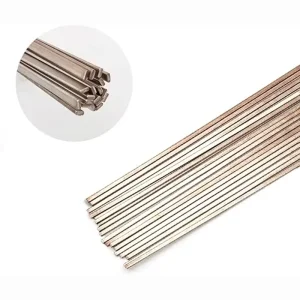
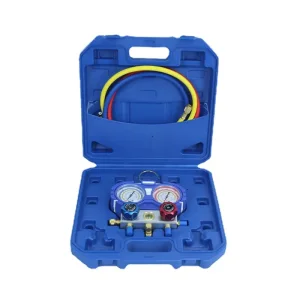
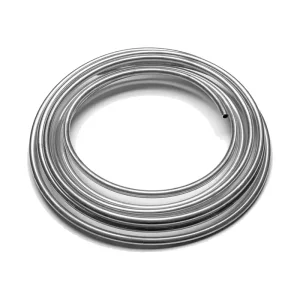
Premium HVAC hardware optimized for direct integration into commercial and residential assembly lines across Hanoi, Bac Ninh, and Ho Chi Minh City.
A Comprehensive Analysis of Manufacturing Growth, Supply Chain Integration, and Technical Demands
Vietnam has consolidated its position as a powerhouse for global electronics, refrigeration, and home appliance assembly. Industrial parks from Bac Ninh and Hai Phong in the North to Binh Duong and Dong Nai in the South are experiencing massive inflows of Foreign Direct Investment (FDI). Major consumer electronics and industrial equipment brands like Samsung, LG, Daikin, and Panasonic have expanded their manufacturing footprint within the country, creating an unprecedented local demand for high-grade copper and brass pipe components.
As cooling demand in Southeast Asia scales due to rapid urbanization, the HVAC and refrigeration sector in Vietnam requires components that conform strictly to international standards (such as ASTM B280, EN 12735-1, and JIS H3300). Precision fabrication, zero-leak tolerance, and superior oxidation resistance are no longer optional—they are critical bottlenecks for plant performance and regulatory compliance.
While Vietnam's local manufacturing capability has scaled quickly, the high-purity casting and precision processing required for specialized refrigerant piping elements, such as copper liquid line filter driers, accumulators, and service split valves, remain dependent on highly specialized external factories. Manufacturers must bridge the gap between local assembly requirements and raw material processing limitations.
By establishing a reliable supply chain partner capable of handling advanced metallurgy, automated CNC machining, and stringent non-destructive quality testing, Vietnamese OEMs can eliminate system degradation risks caused by impurity introduction, internal moisture, or micro-cracks in brazing alloys.
Vietnam's phasing down of HCFCs (such as R22) in favor of eco-friendly refrigerants (like R32, R410A, and R290) demands fittings that withstand higher operating pressures (up to 4.3 MPa) without fatigue.
Industrial green building certifications (LEED and LOTUS) in Vietnam are driving demands for zero-leakage piping installations, pushing manufacturers to implement advanced helium leak testing.
Transition from manual copper brazing to fully automated orbital welding and mechanized connector assemblies inside manufacturing facilities to reduce human error.
How global industrial buyers manage risk, verify chemical purity, and secure long-term contracts.
For copper components used in modern HVAC/R systems, chemical composition is paramount. Sourcing guidelines call for high-purity copper containing at least 99.9% Cu (deoxidized high phosphorus, designation C12200). Phosphorous levels must be strictly regulated within 0.015% to 0.040% to guarantee excellent welding capabilities, corrosion resistance, and structural integrity during expansion and bending processes.
Global supply chains exporting from Vietnam to the US and Europe must adhere to strict environmental baselines. All brass components (split service valves, check valves, and charging connectors) must be manufactured with lead content compliant with the latest RoHS and REACH thresholds. Our manufacturing setup features dedicated lead-free and low-lead brass lines to prevent cross-contamination.
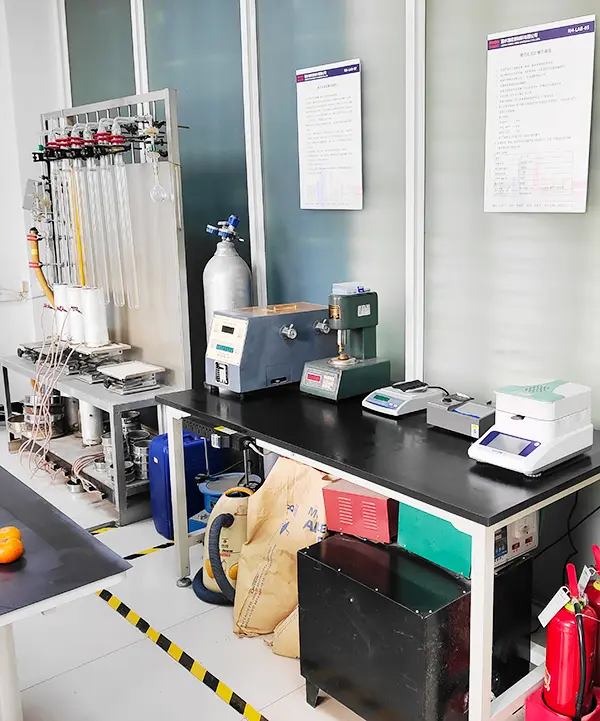
Quality and stability are verified through standardized protocols:
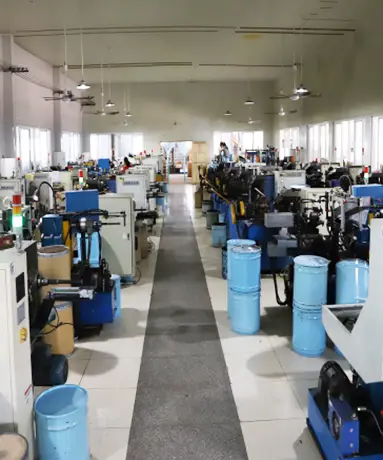
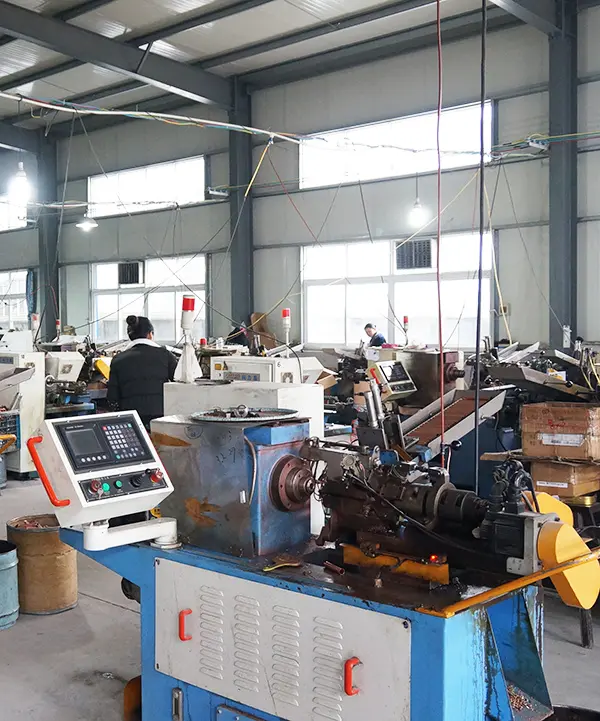
Established in 1988, Ningbo Taojun Refrigeration Equipment Co., Ltd. (formerly Xiangshan Refrigeration Accessories Factory of Zhejiang University) has spent nearly 4 decades perfecting copper filter driers, condenser coils, and refrigeration valves. As an official high-tech enterprise, Taojun has modernized its manufacturing using an integrated **MES (Manufacturing Execution System)** and automated visual inspection systems (CCD).
With core manufacturing technology imported directly from Germany, Taojun combines raw material extraction, casting, processing, and surface treatment in-house. This comprehensive level of control allows us to provide rapid global turnaround times. For the expanding Vietnamese market, our location in Ningbo—adjacent to one of the world's busiest deep-water ports—ensures quick logistics pipelines directly to Hai Phong and Ho Chi Minh City ports within 72 hours, matching local supply chain agility.
Combining university-backed engineering with global scale. We support top household brands like Haier, Midea, Gree, Whirlpool, and Electrolux.
Ningbo Taojun Refrigeration Equipment Co., Ltd. began its journey with technical collaboration from the University of Science and Technology of China and Zhejiang University. This research-focused heritage has enabled us to secure ISO9001:2015, US UL, and European RoHS/REACH environmental certifications.
Our dedicated R&D department employs PhDs and experienced engineers to optimize HVAC fluid system dynamics. From copper molecular sieve filter driers to custom L-bend split service valves and rolling bundy tubes, our products are engineered to handle the demands of heavy-duty industrial application environments.
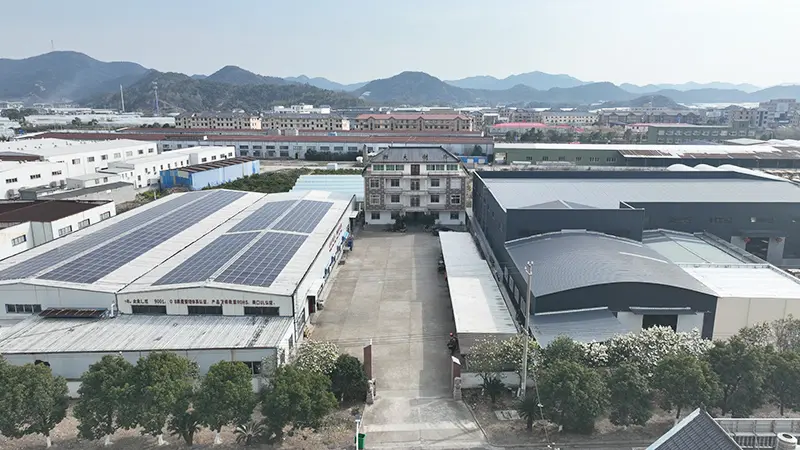
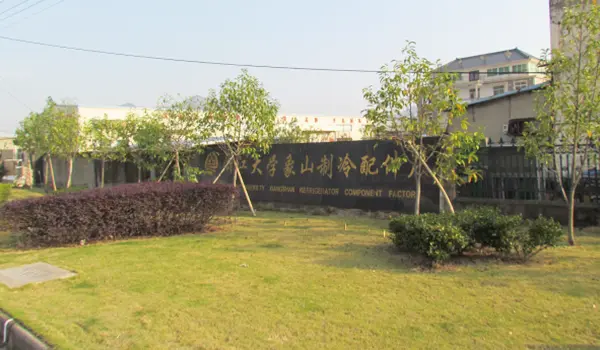
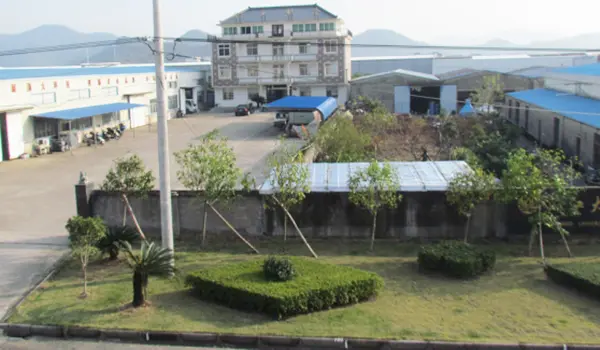
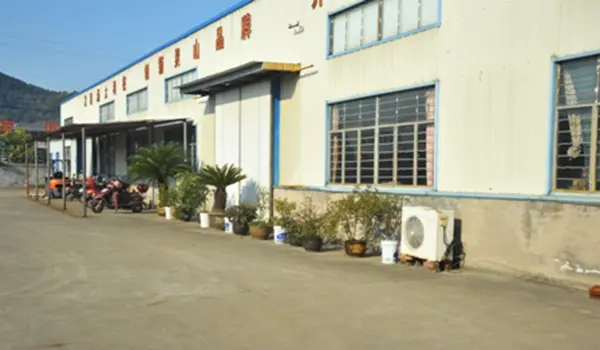
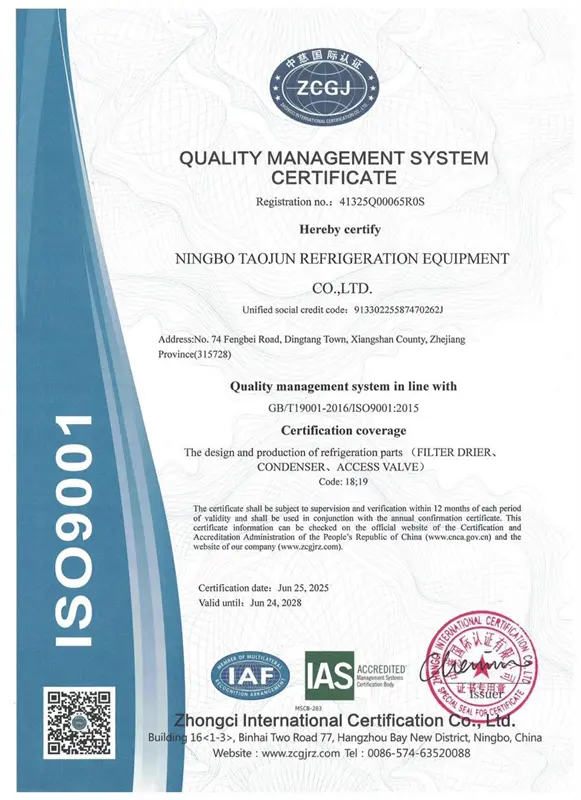
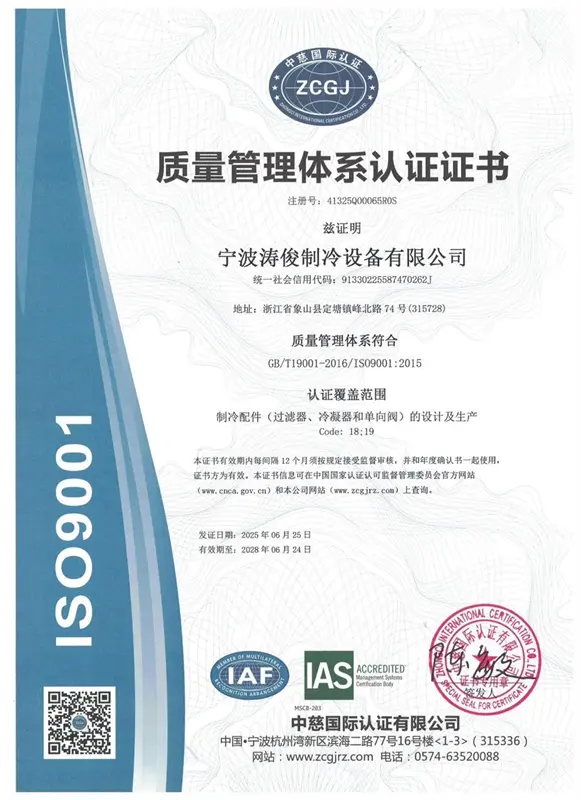
Certified scope: Design and manufacturing of copper filter driers, condenser coils, split valves, and auxiliary piping parts.
Registration No: 41325Q00065R0S. Verified via CNCA and Zhongci International.
Need certified parts for your next compliance audit in Vietnam?
Request Certification PackEngineered components designed for challenging humid tropical climates and demanding industrial installations.
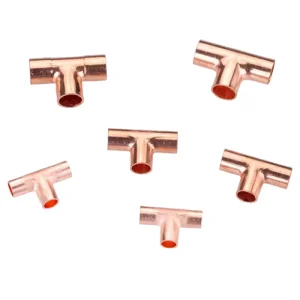
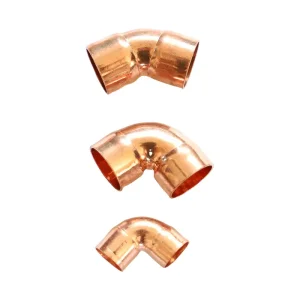
Vietnam's coastal locations, such as Da Nang and Hai Phong, experience high ambient humidity and salt spray. Our deoxidized copper elbows and equal tees feature micro-polished interior walls to prevent copper-sulfidation corrosion and scaling under continuous condensation loads.
Agricultural and aquaculture exports from the Mekong Delta rely on refrigeration. Our copper accumulators, mufflers, and filter driers ensure moisture and acid absorption in transport cooling systems, maintaining thermal stability from farm to container vessel.
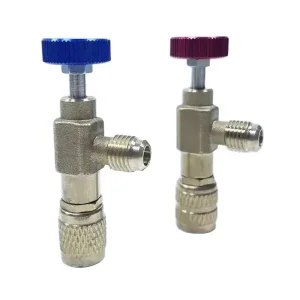
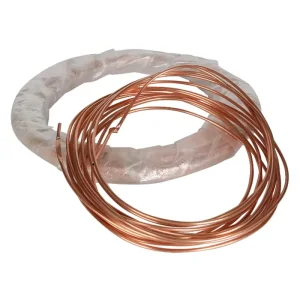
We supply precision-drawn rolling bundy tubes and charging valves directly to domestic and commercial refrigerator assembly factories in Binh Duong. These parts integrate smoothly with automated assembly setups, helping reduce cycle times.
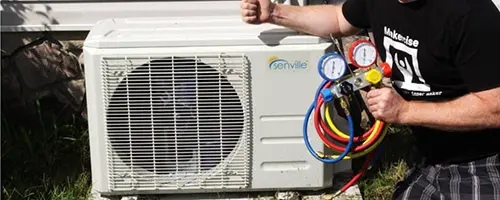
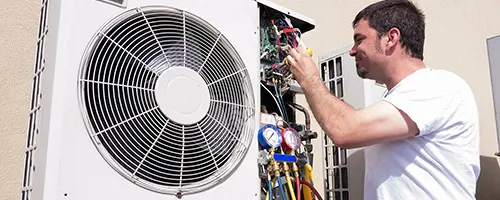
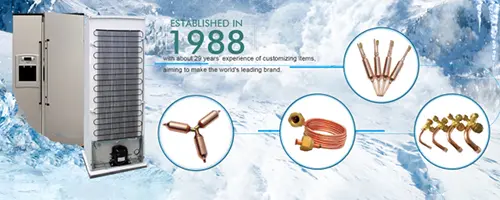
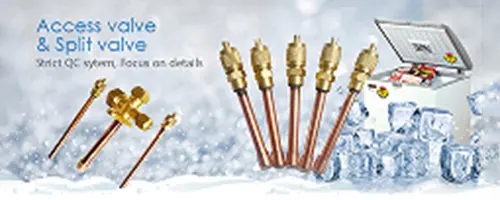
How we verify durability and dimensional precision prior to distribution.
We source raw copper and brass alloys from certified processing plants. Materials undergo spectroscopic checks before extrusion or drawing to confirm exact phosphorus and trace element limits.
We maintain processing tolerances within ±0.02 mm across our CNC machining centers, guaranteeing snug fits for capillary junctions and reducing silver solder usage during final assembly.
Components undergo hot-oil bath, thermal cycling (-35°C to 75°C for 500 hours), and high-pressure nitrogen testing to verify structural integrity under varied tropical conditions.
Our vacuum ovens dry filter driers to remove residual moisture before sealing. Combined with nitrogen charge protection, this ensures interior dryness during overseas transport.
Expert answers on technical criteria, compliance standards, and international logistics.
A: For high-pressure modern refrigerants (like R32 or R410A), we recommend C12200 (Phosphorus-Deoxidized Copper, Cu-DHP). It contains a minimum of 99.9% Cu and 0.015-0.040% phosphorus. This alloy provides excellent grain structure stability, pressure retention up to 4.3 MPa, and resistance to hydrogen embrittlement during brazing.
A: Our export valves are manufactured from low-lead or lead-free brass (e.g., C27450 or C69300), keeping lead content below 0.25% in compliance with RoHS and REACH standards. Each production run is verified via spectrographic analysis and is accompanied by a material test report (MTR).
A: Our filter driers undergo thermal drying in industrial ovens to lower residual moisture levels. They are filled with high-capacity 3A molecular sieves, immediately pressurized with dry nitrogen, and sealed with airtight rubber caps. This preserves desiccant performance until the component is installed.
A: Standard logistics from Ningbo Port to Hai Phong Port (serving Hanoi, Bac Ninh) takes approximately 3 to 5 days. Transit to Cat Lai Port (serving Ho Chi Minh City, Binh Duong) is about 5 to 7 days. We also offer customs documentation support to facilitate smooth processing at ports of entry.
A: Yes. We offer comprehensive OEM/ODM services. Using CNC bending, automated T-drilling, and micro-welding, we manufacture custom branch piping joints and headers matching customer drawing specifications and dimensional tolerances.
A: We utilize automated silver brazing and argon arc welding to ensure uniform joint penetration. Finished parts undergo 100% helium mass spectrometer testing and bubble leak testing to guarantee zero leaks at critical stress points.
Explore our catalog of certified accumulators, condenser components, and pressure monitoring tools designed for industrial integration.
Contact our engineering sales team to request custom samples, verify compliance certificates, or get a quotation for your regional assembly hubs in Vietnam.
Send Inquiry Now Taojun